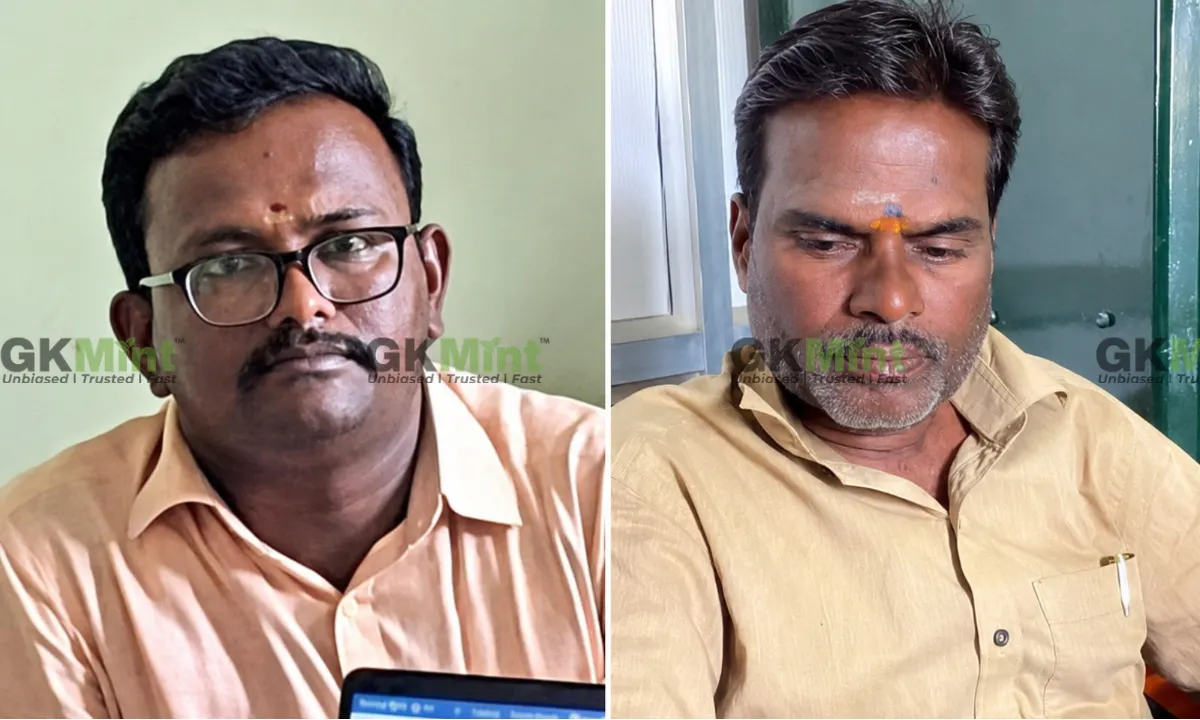
Vigilance and Anti-Corruption police caught a TNEB Assistant Engineer and a Wireman red-handed for accepting a bribe from a farmer who had applied for a temporary electricity connection for his newly constructed house.
Salem: Vigilance and Anti-Corruption (VAC) police have arrested a Tamil Nadu Electricity Board (TNEB) Assistant Engineer and a Wireman for accepting a ₹10,000 bribe from a farmer to provide a temporary electricity connection for the construction of his new house in Salem district.
Farmer Labesh (40), a resident of Gandhipuram in Salem district, had submitted an application a few days ago at the TNEB office in Manjini seeking a temporary electricity connection for the construction of his new house. After reviewing the application, TNEB Assistant Engineer Ayyasamy (39) allegedly demanded a ₹20,000 bribe to provide the electricity connection.

Unwilling to pay the bribe, farmer Labesh lodged a complaint with the Salem Vigilance and Anti-Corruption police. Acting on the complaint, the police devised a plan to catch the officials red-handed and instructed Labesh on how to proceed.
Following the police’s instructions, Labesh visited the office at around 10:00 a.m. today (July 22) and handed over an advance amount of ₹10,000 to Assistant Engineer Ayyasamy and Wireman Chandran (54). At that moment, the Vigilance and Anti-Corruption police, who had been waiting nearby, rushed in and caught both officials red-handed while accepting the bribe.
Following the arrests, a case has been registered against the officials under the Prevention of Corruption Act, and further legal proceedings, including departmental inquiry and judicial custody, are expected to be initiated.
The incident highlights the seriousness of government officials demanding large sums of money as bribes even for providing a basic public service such as an electricity connection, and their immediate arrest by the Vigilance and Anti-Corruption police underscores the swift action taken in the case.
Note: The information in the fifth paragraph regarding subsequent legal proceedings and departmental inquiry has been included for the completeness of the report based on standard legal procedures. These details are not explicitly mentioned in the provided source materials, and readers are advised to verify them independently.