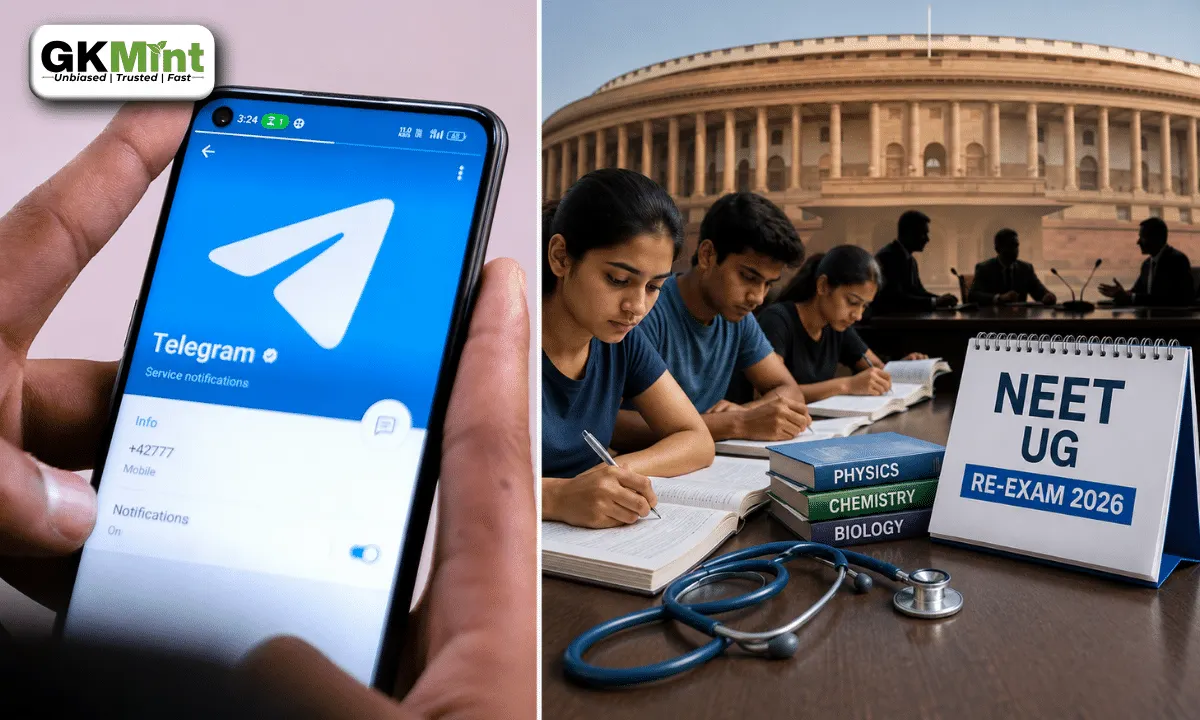
The NEET Re-Exam Telegram Ban marks an unprecedented digital intervention by Indian authorities as officials move to prevent exam-related fraud, misinformation, and alleged paper leak networks ahead of the June 21 medical entrance re-examination.
New Delhi, India – June 2026
NEET Re-Exam Telegram Ban has emerged as one of the most significant digital governance decisions taken by Indian authorities in recent years. In an effort to protect the integrity of the National Eligibility cum Entrance Test (NEET) re-examination scheduled for June 21, the Ministry of Electronics and Information Technology (MeitY) temporarily blocked Telegram across India until June 22.
The decision was taken following recommendations from the National Testing Agency (NTA), which cited concerns over the platform’s alleged use in facilitating examination fraud, spreading misinformation, and enabling paper leak scams. The move comes after the cancellation of the original NEET examination conducted on May 3 amid allegations of question paper leaks and examination irregularities.
With millions of students competing for admission to medical colleges, the government described the action as a necessary measure to preserve public confidence in one of India’s most important entrance examinations.
Key Highlights
- Telegram was temporarily blocked nationwide until June 22.
- The NTA requested the restriction ahead of the June 21 NEET re-examination.
- Authorities cited concerns over paper leak scams and misinformation campaigns.
- Several Telegram channels allegedly advertised leaked question papers for sale.
- Cybercrime agencies removed numerous fraudulent channels and groups.
- Telegram was instructed to disable message-editing capabilities for certain content in India until June 30.
- Multiple arrests have been made in connection with alleged NEET-related fraud operations.
Detailed Analysis
Why Authorities Implemented the NEET Re-Exam Telegram Ban
The NEET Re-Exam Telegram Ban was introduced after investigators identified Telegram as a frequently used platform in several examination-related fraud schemes.
According to officials, numerous Telegram groups emerged following the cancellation of the May examination. These groups claimed to possess leaked question papers for the upcoming re-exam and offered access to students in exchange for payments ranging from thousands to several lakh rupees.
Many channels openly advertised services under names suggesting access to confidential examination materials. Authorities feared that such activities could undermine public confidence, increase anxiety among students, and create opportunities for financial fraud.
The NTA has repeatedly stated that examination papers remain secured within a protected distribution system and that no confirmed leak of the re-exam paper has occurred.
The Scale of India’s Medical Entrance Examination System
The significance of the NEET Re-Exam Telegram Ban becomes clearer when considering the scale of the examination itself.
NEET is India’s primary gateway for admission to undergraduate medical and dental programs. Every year, millions of students compete for a limited number of seats in government and private medical institutions.
Given the high stakes involved, even allegations of irregularities can have far-reaching consequences for students, educational institutions, and policymakers.
Officials argued that preventing misinformation and fraud was essential to ensuring a level playing field for candidates across the country.
The Message-Editing Loophole
A major factor behind the NEET Re-Exam Telegram Ban was a technical feature within Telegram that investigators believed could be exploited.
Authorities highlighted Telegram’s message-editing functionality, which allows administrators to modify previously posted content while preserving the original timestamp.
Investigators alleged that scammers could exploit this feature by posting harmless content before an examination and later replacing it with actual question papers after the exam concluded. The unchanged timestamp could then be used to falsely claim that the paper had been leaked before the examination began.
Such fabricated evidence can rapidly spread across social media platforms, creating confusion, panic, and mistrust among students and the public.
To address this concern, authorities directed Telegram to temporarily restrict certain editing functions related to examination-related content in India.
Expert and Official Reactions
National Testing Agency
Officials from the NTA described the action as a precautionary measure intended to protect examination integrity and prevent the spread of misleading information.
The agency emphasized that question papers remain under strict security protocols throughout the examination process and urged students not to trust individuals claiming to possess leaked materials.
Cybercrime Authorities
Officials from cybercrime units across multiple states reported increased monitoring of online platforms following the emergence of suspicious examination-related groups.
Investigators noted that many individuals advertising leaked papers were primarily engaged in financial fraud rather than possessing genuine examination documents.
Recent enforcement actions resulted in arrests linked to alleged scams targeting students and parents.
Education Experts
Education policy analysts have largely supported stronger digital monitoring during high-stakes examinations while also emphasizing the importance of maintaining transparency and protecting legitimate online communication.
Experts argue that examination authorities must continue investing in secure testing infrastructure, advanced cybersecurity systems, and public awareness campaigns to combat evolving fraud techniques.
Background & Context
The May 3 Examination Controversy

The current NEET Re-Exam Telegram Ban follows significant controversy surrounding the original NEET examination conducted on May 3.
Following allegations of paper leaks and procedural irregularities, authorities launched investigations into multiple suspected networks. The controversy generated widespread debate about examination security and accountability.
As public scrutiny intensified, policymakers faced mounting pressure to restore trust in the examination process.
The decision to conduct a re-examination was intended to provide affected candidates with a fair opportunity while ensuring that admissions remained merit-based.
Growing Digital Examination Fraud
The issue extends beyond a single examination.
Across India, authorities have increasingly encountered sophisticated fraud networks using encrypted messaging platforms, social media channels, and digital payment systems to target students preparing for competitive exams.
These operations often exploit fear, uncertainty, and intense academic competition by promising access to leaked papers or guaranteed admission opportunities.
The NEET Re-Exam Telegram Ban represents one of the strongest responses yet to these emerging digital threats.
Impact & Implications
For Students
Students are likely to benefit from enhanced examination security and reduced misinformation.
However, the temporary restriction may also affect candidates who use Telegram for legitimate educational discussions, study groups, and preparation resources.
For Technology Platforms
The NEET Re-Exam Telegram Ban raises important questions about platform accountability and cooperation with government authorities during sensitive national events.
Technology companies may face increasing pressure to strengthen moderation systems and address features that could potentially be misused.
For Public Policy
The decision could influence future approaches to digital governance and cybersecurity.
Policymakers may examine whether temporary restrictions on online platforms are effective tools for combating examination fraud while balancing concerns about digital freedom and access to information.
For Examination Authorities
The episode underscores the growing importance of integrating cybersecurity measures into examination management systems.
Future reforms may include stronger encryption protocols, enhanced monitoring capabilities, and closer collaboration between educational agencies and law enforcement authorities.
The NEET Re-Exam Telegram Ban represents a landmark moment in India’s efforts to protect the integrity of competitive examinations in the digital age. Faced with allegations of paper leaks, fraudulent schemes, and misinformation campaigns, authorities chose an extraordinary course of action aimed at safeguarding millions of students participating in one of the country’s most important entrance tests.
While debate over the effectiveness and broader implications of such restrictions is likely to continue, the immediate focus remains on ensuring a fair and transparent NEET re-examination. The outcome of this initiative may shape future examination security policies and influence how governments, educational institutions, and technology platforms collaborate to address emerging digital threats.