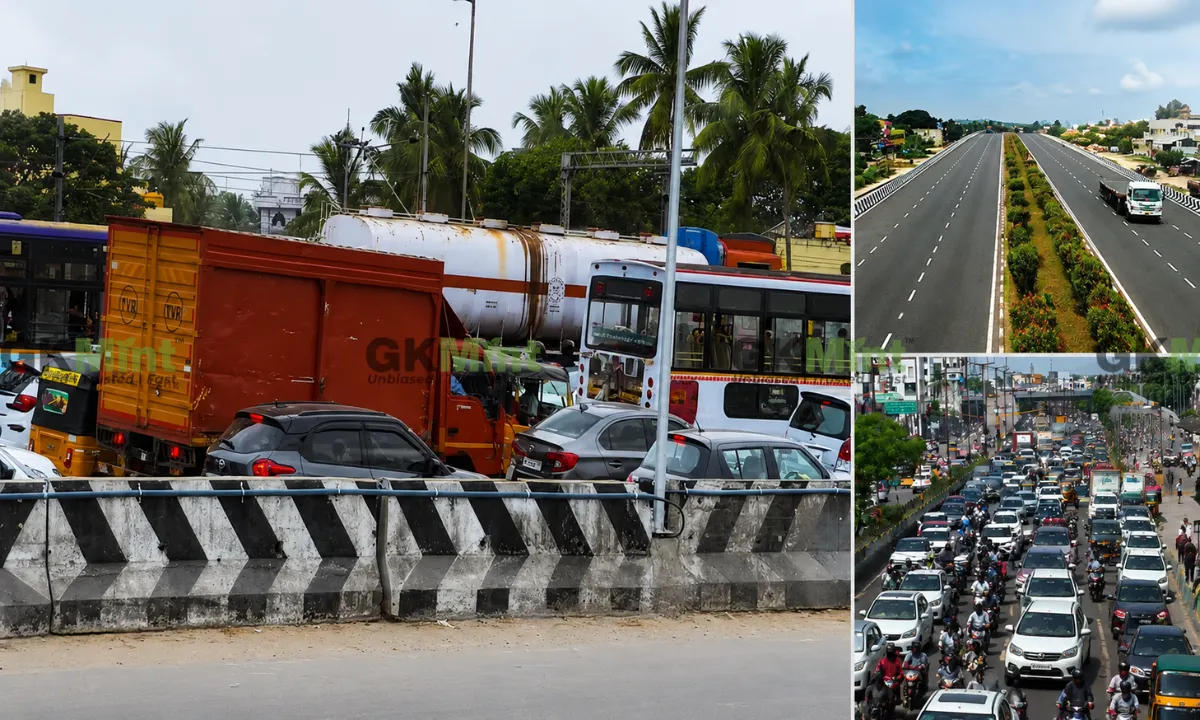
State government’s 2026 White Paper highlights ₹13.18 lakh crore overall debt, rising revenue deficits, and mounting losses in key public sectors.
Chennai, Tamil Nadu
Tamil Nadu Financial Crisis has emerged as one of the most significant public finance concerns in the state’s recent history, following the release of a comprehensive White Paper by the Tamil Nadu government. Presented by Finance Minister Maria Wilson, the report paints a detailed picture of the state’s fiscal condition, highlighting record debt levels, widening revenue deficits, mounting liabilities in public sector enterprises, and structural challenges affecting long-term economic sustainability.
The White Paper reveals that Tamil Nadu’s direct debt has crossed ₹10 lakh crore, while the state’s overall liabilities, including those of public sector enterprises, have reached ₹13.18 lakh crore. The findings have sparked discussions among economists, policymakers, industry stakeholders, and citizens regarding the future direction of the state’s finances and economic growth.
Government officials say the report aims to provide transparency regarding the fiscal situation while outlining a roadmap for corrective reforms rather than additional taxation.
Key Highlights
Major Findings from the White Paper
- Revenue deficit has reached ₹78,324 crore, the highest recorded in the state’s history.
- Direct government debt stands at ₹10 lakh crore.
- Total debt, including public sector undertakings, has risen to ₹13.18 lakh crore.
- Per capita debt burden has increased to ₹1,28,934.
- Annual interest payments have reached approximately ₹67,000 crore.
- Nearly 22.8 paise of every rupee earned is spent on interest payments.
- Around 64% of state expenditure goes toward salaries, pensions, and interest obligations.
- Welfare schemes account for only 13% of total expenditure.
- The state spends approximately ₹145 for every ₹100 earned.
- Power utility debt has climbed to ₹2.5 lakh crore.
- Transport sector losses have reached ₹72,667 crore.
- Total Civil Supplies Corporation debt stands at ₹27,181 crore.
Detailed Analysis
Revenue Deficit Reaches Historic Levels
The White Paper identifies a revenue deficit of ₹78,324 crore as one of the clearest indicators of the Tamil Nadu Financial Crisis. A revenue deficit occurs when a government’s routine expenditure exceeds its regular income.
According to the report, the current deficit exceeds levels seen during the COVID-19 pandemic, reflecting deeper structural imbalances in state finances.
The government notes that continued borrowing to finance operational expenses has created long-term fiscal pressure, limiting the state’s ability to invest in infrastructure and development projects.
Debt Burden Continues to Rise
The report highlights that Tamil Nadu’s direct debt has crossed ₹10 lakh crore. When liabilities from state-owned enterprises are included, total debt rises dramatically to ₹13.18 lakh crore.
The implications are significant for citizens. The White Paper estimates that every resident effectively carries a debt burden of ₹1,28,934.
Officials also note that personal debt obligations linked to state borrowing increased by nearly 92% during the previous administration, raising concerns about fiscal sustainability.

Interest Costs Consume Growing Share of Revenue
One of the most striking findings is the growing cost of servicing debt.
The government spends approximately ₹67,000 crore annually on interest payments alone. This means that for every rupee collected, nearly 22.8 paise is immediately used to pay interest obligations.
As a result, a substantial portion of government resources is unavailable for developmental spending, infrastructure projects, healthcare improvements, or education investments.
Public Sector Enterprises Under Financial Stress
TANGEDCO’s Massive Debt Challenge
The White Paper identifies the power sector as one of the largest contributors to the Tamil Nadu Financial Crisis.
Tamil Nadu Generation and Distribution Corporation (TANGEDCO) carries an estimated debt burden of ₹2.5 lakh crore. The report notes a cumulative gap of ₹1.45 lakh crore between income and expenditure in the sector.
Power distribution operations alone account for debt exceeding ₹1.07 lakh crore.
Experts have long pointed to electricity subsidies, transmission losses, delayed tariff revisions, and operational inefficiencies as key factors affecting the sector’s financial health.
Transport Sector Losses Deepen
The state’s transport corporations have reported cumulative losses of ₹72,667 crore.
According to official figures, government buses incur an average operating cost of ₹78.81 per kilometer while generating only about ₹25 in revenue.
This results in a loss of approximately ₹53 per kilometer, creating a substantial burden on public finances.
The report indicates that operating expenses have expanded significantly over time without a corresponding increase in revenue generation.
Civil Supplies Corporation Debt
The Tamil Nadu Civil Supplies Corporation has also seen a rise in liabilities, with debt reaching ₹27,181 crore.
The White Paper suggests that sustained subsidy commitments and operational costs have contributed to the increase.
Reasons Behind the Fiscal Deterioration
Borrowing for Operational Expenses
A key concern highlighted in the report is the growing reliance on borrowing for routine expenditure rather than productive capital investments.
The White Paper states that over the past two decades, insufficient efforts were made to reduce debt levels or improve fiscal efficiency.
As a result, debt growth has outpaced capital expenditure, limiting the state’s ability to generate long-term economic returns from borrowed funds.
Revenue Collection Challenges
The Tamil Nadu Financial Crisis has also been linked to declining revenue performance.
The report points to:
- Lower GST collections compared with neighboring states.
- Reduced revenue as a percentage of Gross State Domestic Product (GSDP), falling from 10% to 8.32%.
- Revenue losses associated with reduced guideline values in property registrations.
- Lower stamp duty collections relative to prevailing market values.
Corruption and Resource Management Concerns
The White Paper also raises concerns regarding alleged revenue leakages in the mineral resources sector.
Officials argue that stronger governance and improved oversight mechanisms could have generated higher revenues from the state’s natural resources.
Expert and Official Reactions
Finance Minister Maria Wilson emphasized that the White Paper is intended to provide transparency regarding the state’s fiscal position.
According to the minister, the government does not intend to introduce new taxes to fund welfare programs. Instead, future initiatives will focus on administrative reforms, improved tax compliance, and measures to increase revenue efficiency.
Economic analysts note that transparency through fiscal reporting is an important first step. However, they also emphasize the need for structural reforms in power distribution, public transport operations, pension liabilities, and revenue mobilization.
Business groups have welcomed the commitment to avoid additional tax burdens while expressing interest in reforms that improve investment confidence and fiscal stability.
Background & Context
Tamil Nadu has traditionally been one of India’s most industrialized and economically significant states. The state has consistently ranked among the country’s leading contributors to manufacturing, automobile production, information technology, healthcare, and exports.
However, rising welfare commitments, increasing pension obligations, expanding subsidy programs, and losses within state-owned enterprises have placed growing pressure on government finances.
The White Paper notes that Tamil Nadu is increasingly becoming an aging state before reaching the income levels associated with wealthier economies. This demographic transition could further increase pension, healthcare, and social welfare expenditures in coming years.
Compared with states such as Karnataka, Maharashtra, and Gujarat, the report indicates that Tamil Nadu’s fiscal indicators have weakened significantly.
Impact & Implications
The Tamil Nadu Financial Crisis could have far-reaching implications across multiple sectors.
For Citizens
- Higher debt servicing costs may limit future spending on public services.
- Reduced fiscal flexibility could affect welfare expansion.
- Long-term borrowing may increase financial pressure on future generations.
For Businesses
- Investors will closely monitor fiscal reforms and governance improvements.
- Greater fiscal stability could strengthen business confidence and attract investment.
For Policymakers
- Revenue enhancement without imposing new taxes will become a critical challenge.
- Reforms in public sector enterprises may be necessary to reduce losses.
- Better expenditure management could improve fiscal sustainability.
For the Economy
If current trends continue, total debt could rise to nearly ₹18 lakh crore within the next five years, according to projections cited in the report. This makes fiscal correction an urgent priority.
The Tamil Nadu Financial Crisis highlighted in the 2026 White Paper presents one of the state’s most significant fiscal challenges in decades. With total liabilities reaching ₹13.18 lakh crore, a record revenue deficit of ₹78,324 crore, and substantial losses across major public sector enterprises, the report underscores the scale of the task ahead.
At the same time, the government’s commitment to pursuing reforms rather than imposing new taxes signals a strategy focused on improving efficiency, strengthening revenue collection, and restoring fiscal discipline. The success of these measures will likely determine whether Tamil Nadu can reverse current trends and place its economy on a more sustainable path in the years ahead.
Also Read: C. Vijayabaskar Resignation: A Turning Point That Could Reshape Tamil Nadu Politics