Lok Sabha session highlights the role of the Cauvery Water Management Authority in resolving inter-state water concerns.
The Indian government recently informed the lower house of Parliament that the Cauvery Water Management Authority (CWMA) remains the primary body responsible for securing Tamil Nadu’s legal water entitlement,. This statement comes amidst ongoing regional concerns regarding upstream infrastructure projects and their potential impact on the flow of water to lower riparian regions,.
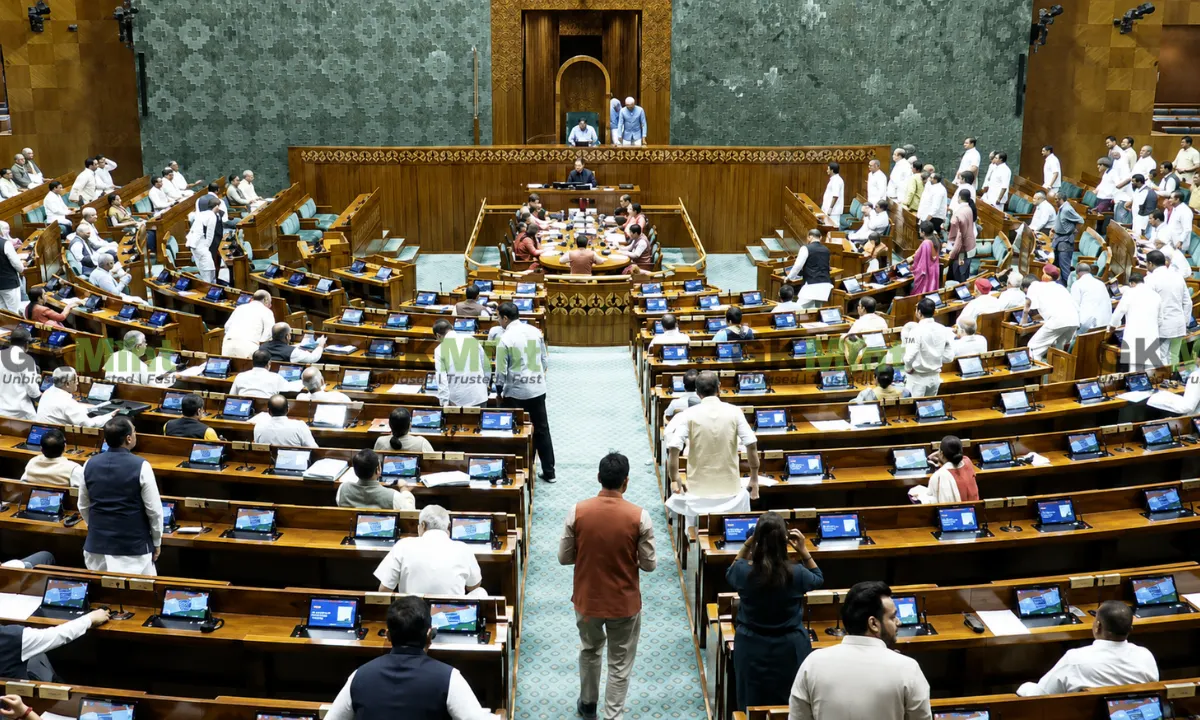
During a session in the Lok Sabha, the Centre clarified its stance on the contentious Mekedatu project in response to inquiries from Cuddalore MP Vishnu Prasad,. The government revealed that it had returned a 2019 project report submitted by the Karnataka government, requesting significant modifications. These revisions are intended to bring the proposal into alignment with the final award granted by the Cauvery Water Dispute Tribunal and the established technical guidelines of the Central Water Commission.
The Kaveri water dispute is rooted in decades of legal contention over river sharing. A pivotal development occurred on February 16, 2018, when the Supreme Court issued a judgment regarding the distribution of the river’s resources,. While the court affirmed that states have the right to manage and utilize water within their boundaries, it emphasized that such actions must not contradict the orders of the water tribunal. Notably, the court’s 2018 ruling did not explicitly mandate that Karnataka obtain formal consent from Tamil Nadu, Kerala, or Puducherry before commencing constructions.

The Union government stated that both the CWMA and the Cauvery Water Regulation Committee (CWRC) are functioning to ensure that the legal share of water reaches Tamil Nadu. Furthermore, the Centre acknowledged that it is currently reviewing several formal objections raised by the Tamil Nadu administration and various agricultural associations,. These stakeholders have expressed concern that the proposed Mekedatu reservoir could disrupt the supply of water essential for irrigation in the Kaveri Delta and drinking water across multiple districts.
The resolution of these issues has a direct bearing on the livelihoods of millions of residents and farmers within the river basin. The agricultural stability of the Delta region and the reliability of domestic water supplies are contingent upon the consistent release of water as stipulated by legal frameworks,. The Centre’s latest clarification underscores the procedural oversight intended to prevent unilateral developments that could disadvantage downstream users.
By highlighting the authority of the CWMA, the Central Government has signaled a commitment to a structured, law-based approach to river management,. The decision to return the Mekedatu project report for technical revisions suggests that any future infrastructure plans will be subjected to rigorous scrutiny to protect the rights of all stakeholder states involved,.