Introduction
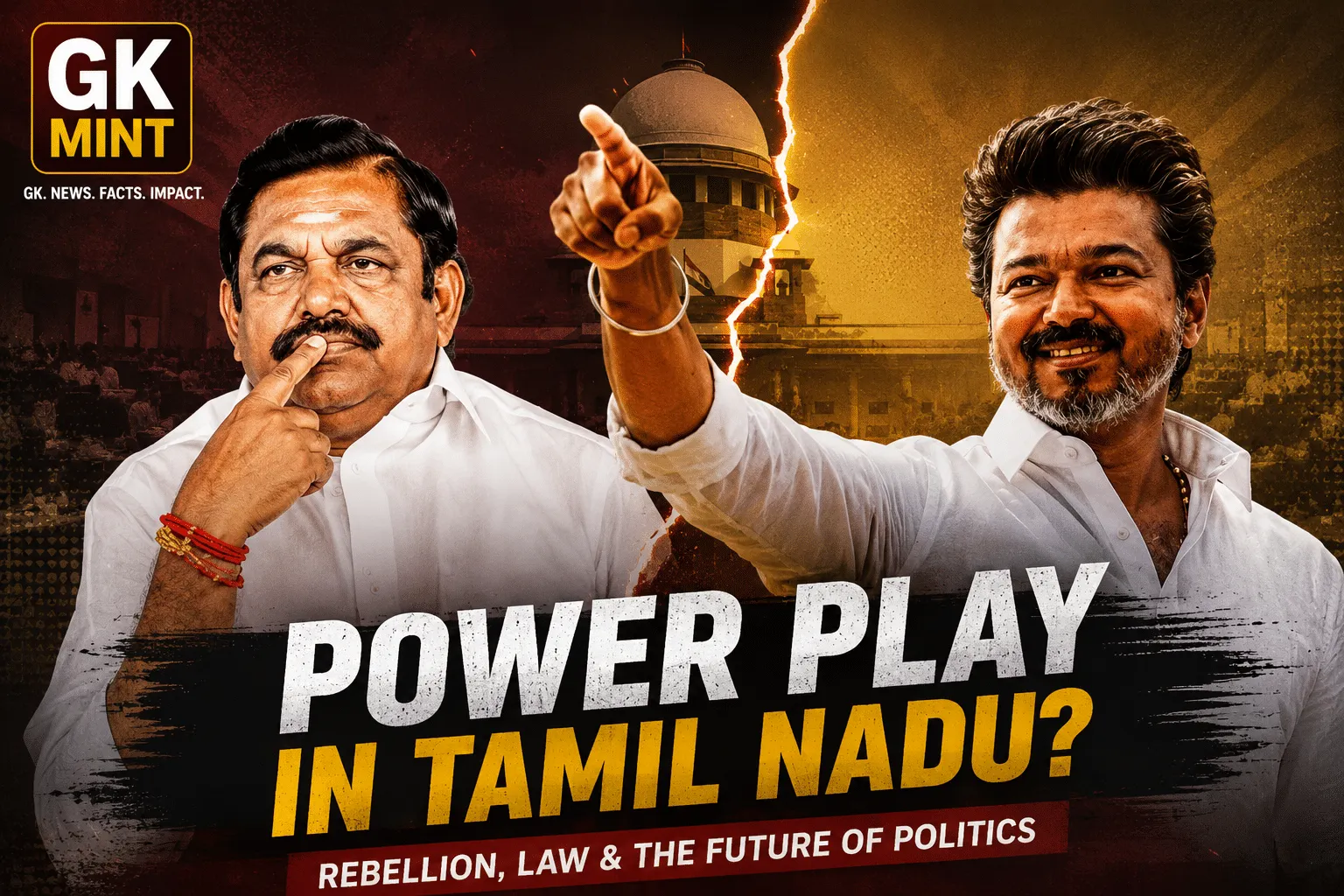
Tamil Nadu politics has entered one of its most politically sensitive and constitutionally important phases in recent years. What initially appeared to be a routine trust vote in the Assembly has now transformed into a major political and legal battle involving rebel AIADMK MLAs, the stability of the TVK government, possible disqualification proceedings, leadership struggles inside AIADMK, and serious questions surrounding India’s Anti-Defection Law. The developments have triggered debates not only inside Tamil Nadu but across the country because the crisis reflects a larger pattern seen repeatedly in Indian politics over the last decade. Similar rebellions and defections have already brought down governments in Karnataka, Madhya Pradesh, Maharashtra, and Arunachal Pradesh, making the Tamil Nadu developments another major test of whether India’s Anti-Defection Law is still capable of controlling modern political rebellions and coalition-era instability.
How the Tamil Nadu Political Crisis Began
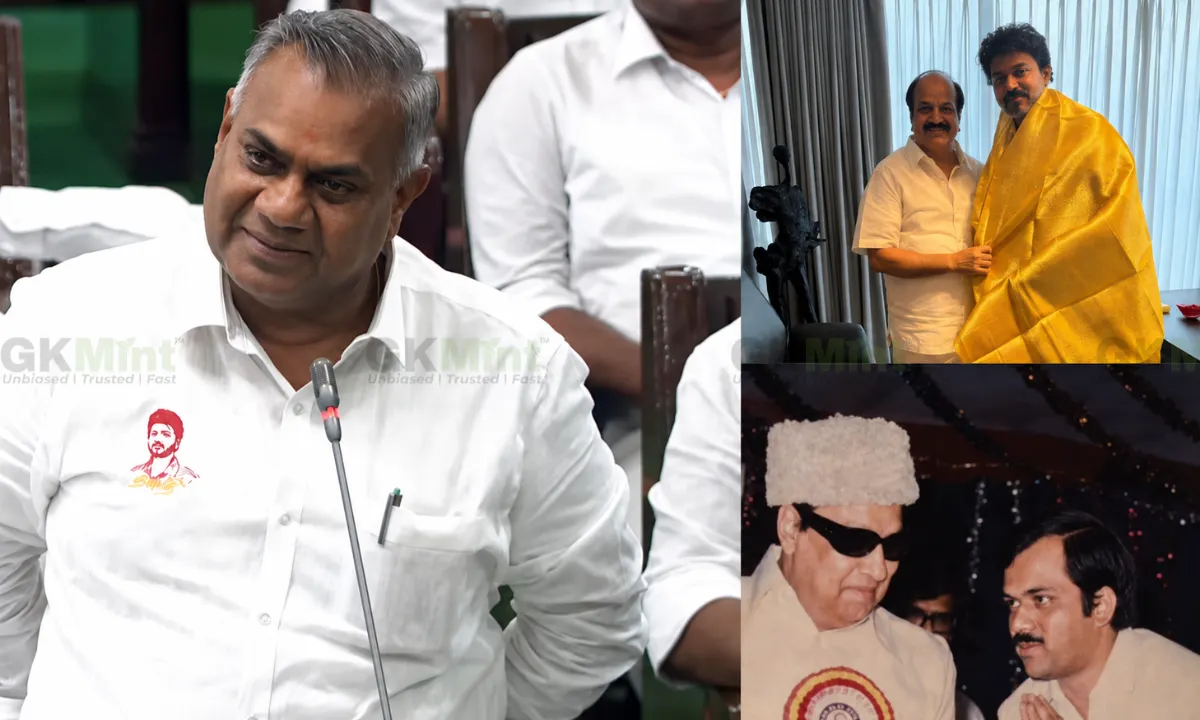
The current controversy began during the confidence vote conducted by the government led by C Joseph Vijay. The ruling government needed to prove its majority in the Tamil Nadu Assembly, and the opposition AIADMK officially decided to oppose the government during the vote under the leadership of Edappadi K Palaniswami. However, the political atmosphere changed dramatically when 25 AIADMK MLAs voted in support of the government instead of following the official party stand. The incident immediately exposed a serious split inside AIADMK and triggered discussions about possible disqualification proceedings under the Anti-Defection Law. Soon after the trust vote, several rebel functionaries reportedly faced disciplinary action from the party leadership while political rumours intensified that some rebel MLAs could eventually be rewarded with ministerial positions in the government. This transformed the issue from a simple internal disagreement into a full-scale constitutional and political crisis.
What is the Anti-Defection Law?
The Anti-Defection Law was introduced in 1985 through the Tenth Schedule of the Indian Constitution to stop elected representatives from changing political loyalties for power, money, or political benefits. The law was created after decades of political instability caused by frequent defections that repeatedly brought down elected governments across India. Under the law, MLAs and MPs can be disqualified if they voluntarily give up membership of their political party or vote against the official party whip during important proceedings in the legislature. The law was intended to strengthen party discipline and protect the stability of governments, but over time political parties and legislators have found several ways to bypass its spirit through resignations, group rebellions, and merger loopholes.
Why the Rebel AIADMK MLAs Could Face Disqualification
One of the most important aspects of the Anti-Defection Law is that legislators do not necessarily need to officially resign from their party to attract disqualification. Over the years, the Supreme Court has repeatedly ruled that political conduct itself can amount to “voluntarily giving up membership.” This means that if an MLA openly supports a rival political formation or acts against the official party position, the Speaker may treat it as defection even without a formal resignation letter. In the Tamil Nadu case, the rebel AIADMK MLAs voted against the official party stand during a confidence vote, publicly supported the ruling government, and openly challenged the authority of the existing leadership. These actions could become the basis for disqualification proceedings under the Tenth Schedule.
Why the Ministerial Berth Controversy Became Politically Sensitive
The controversy intensified further after reports emerged suggesting that some rebel AIADMK MLAs could be inducted into the cabinet. Critics argued that rewarding rebel legislators with ministerial positions would directly go against the spirit of the Anti-Defection Law because the law was originally designed to prevent legislators from changing loyalties in exchange for political rewards. The developments triggered a larger debate about whether the current situation represents legitimate political realignment or an example of engineered defections aimed at strengthening the ruling government. The issue also revived national conversations about whether the Anti-Defection Law has become too weak to stop modern political strategies that rely on internal rebellions rather than direct party-switching.
The Internal Leadership Crisis Inside AIADMK
The rebellion has also exposed deeper tensions inside AIADMK itself. Since the death of J. Jayalalithaa, the party has repeatedly faced internal power struggles, factional battles, and leadership conflicts. The present rebellion appears to be more than just support for the government during a trust vote because several dissident leaders reportedly believe that the current leadership under EPS has weakened the party politically and failed to rebuild AIADMK strongly after the Jayalalithaa era. Reports suggest that some rebel leaders are exploring ways to directly challenge the current party leadership structure, meaning the crisis is now unfolding simultaneously as both a constitutional battle involving anti-defection provisions and an internal political war over the future leadership of AIADMK.
Also Read: Seeman vs Sri Lankan MP: Political Debate Over Eelam Issue Sparks Fresh Controversy
The Speaker’s Role Could Decide the Future of the Crisis
Under the Anti-Defection Law, the Speaker of the Assembly has the authority to decide whether MLAs should be disqualified. This gives the Speaker enormous constitutional power during politically sensitive situations. However, India’s political history shows that Speakers often become controversial figures during anti-defection disputes because they are frequently accused of political bias, delayed decisions, and selective interpretation of constitutional provisions. In several earlier political crises across India, Speakers delayed disqualification proceedings for months while governments continued to survive politically. If petitions are filed against the rebel AIADMK MLAs, the Speaker’s decisions and the timing of those decisions could determine whether the MLAs continue in office, whether the government remains politically stable, and whether courts eventually intervene.
Karnataka Political Crisis (2019)
The Karnataka crisis became one of the clearest examples of how governments can collapse without direct defections. After the 2018 Assembly elections, Congress and Janata Dal (Secular) formed a coalition government led by H. D. Kumaraswamy, but the alliance remained politically fragile because it depended on a narrow majority. In 2019, several Congress and JDS MLAs resigned from the Assembly, reducing the ruling coalition below the majority mark and triggering a major constitutional crisis. The political drama intensified as rebel MLAs were moved to resorts and hotels while both sides accused each other of horse-trading. The Speaker delayed decisions on resignations and disqualification petitions, and the matter eventually reached the Supreme Court. The coalition government later collapsed, allowing the Bharatiya Janata Party to return to power under B. S. Yediyurappa. The Karnataka episode exposed a major loophole in the Anti-Defection system because legislators effectively bypassed disqualification by resigning before formally switching political sides.
Madhya Pradesh Political Crisis (2020)
Madhya Pradesh witnessed another major political upheaval in 2020 when the Congress government led by Kamal Nath collapsed after internal tensions intensified within the party. The situation escalated after senior Congress leader Jyotiraditya Scindia rebelled against the party leadership, following which more than 20 Congress MLAs resigned from the Assembly. Their resignations drastically weakened the government’s majority and eventually led to the fall of the Kamal Nath government. The BJP later returned to power under Shivraj Singh Chouhan. The Madhya Pradesh crisis once again demonstrated how coordinated resignations could achieve political realignment while technically avoiding traditional anti-defection proceedings.
Maharashtra Political Crisis (2022)
The Maharashtra political crisis became one of the biggest anti-defection and constitutional battles in recent Indian political history. The government led by Uddhav Thackeray was formed through an alliance between Shiv Sena, Congress, and the Nationalist Congress Party, but internal dissatisfaction within Shiv Sena gradually intensified over time. In 2022, senior Shiv Sena leader Eknath Shinde led a massive rebellion against the party leadership, and a large group of Shiv Sena MLAs moved out of Maharashtra and publicly declared support for Shinde. The rebellion triggered legal battles, anti-defection proceedings, questions over party legitimacy, and a fight over the Shiv Sena name and symbol. The crisis eventually led to the resignation of Uddhav Thackeray and the collapse of the government, after which Eknath Shinde became Chief Minister with BJP support. The Maharashtra crisis demonstrated how modern political rebellions are no longer simple defections but full-scale constitutional battles involving party identity, legislative authority, and judicial interpretation.
Arunachal Pradesh Constitutional Crisis (2016)
The Arunachal Pradesh crisis became one of the most important constitutional moments related to the Anti-Defection Law. The Congress government led by Nabam Tuki faced internal rebellion from several party MLAs, and political tensions increased rapidly as anti-defection proceedings were initiated against rebel legislators while simultaneous efforts were made to remove the Speaker himself. The constitutional crisis eventually reached the Supreme Court in the landmark Nabam Rebia judgment, where the Court ruled that a Speaker facing removal proceedings should not decide anti-defection petitions during that period. This judgment became extremely important because it acknowledged growing concerns that Speakers often function as political actors rather than neutral constitutional authorities during politically sensitive situations.
Why the Tamil Nadu Crisis Matters Beyond the State
The current rebellion inside AIADMK is not just a regional political issue because the developments may become one of the biggest tests of India’s Anti-Defection framework in recent years. The crisis combines a trust vote rebellion, internal party warfare, possible ministerial rewards, Speaker intervention, constitutional interpretation, and potential court battles. The outcome could influence future political strategies across India because if the rebel MLAs survive politically despite openly defying the party during a confidence motion, it may encourage similar rebellions in other states. On the other hand, strong disqualification action could reinforce party discipline and strengthen the Anti-Defection framework.
Conclusion
Tamil Nadu has now entered a politically volatile and constitutionally sensitive period where what started as a routine trust vote has transformed into a major confrontation involving constitutional morality, legislative discipline, internal party legitimacy, government stability, Speaker powers, and judicial interpretation. The Anti-Defection Law was originally introduced to stop the culture of unstable governments and political opportunism that once dominated Indian politics, but modern political strategies involving coordinated resignations, factional rebellions, merger loopholes, and delayed proceedings have repeatedly tested the limits of the law. The ongoing AIADMK rebellion may ultimately become another landmark chapter in India’s long constitutional struggle between democratic freedom and political stability. The coming months could decide not only the future of the rebel AIADMK MLAs and the TVK government, but also whether India’s Anti-Defection Law still possesses the strength to control modern political defections in an era of aggressive coalition politics and internal party fragmentation.
Reference : Thenewsminute