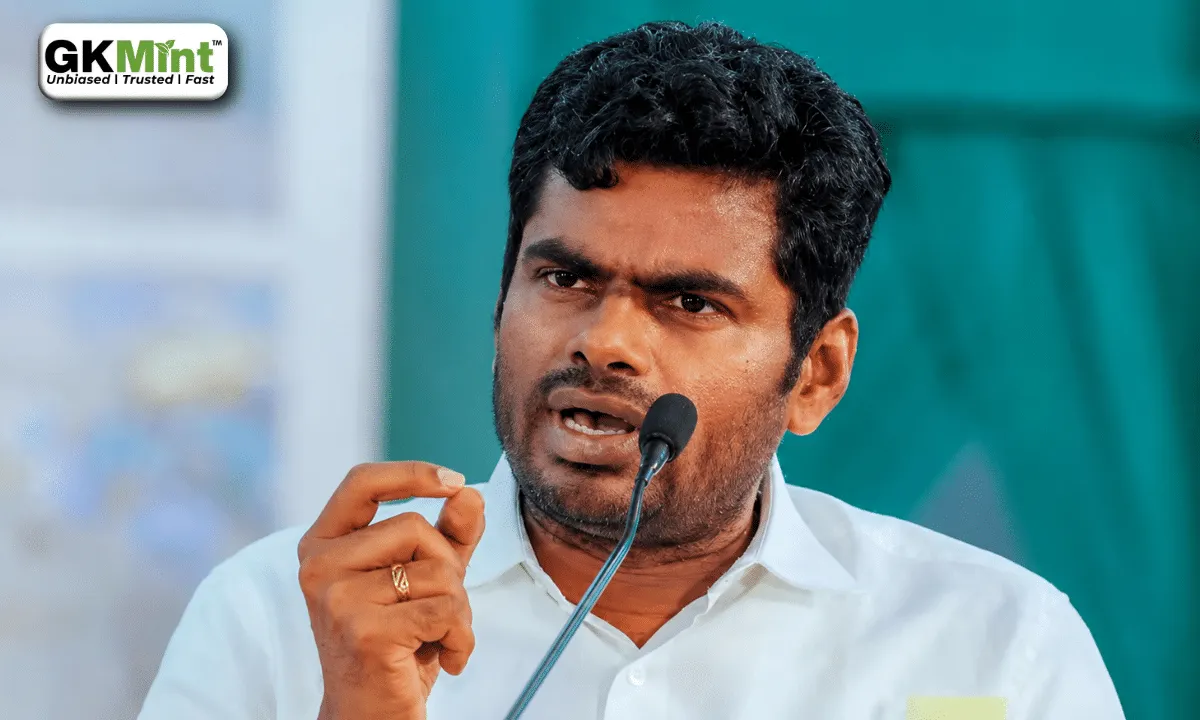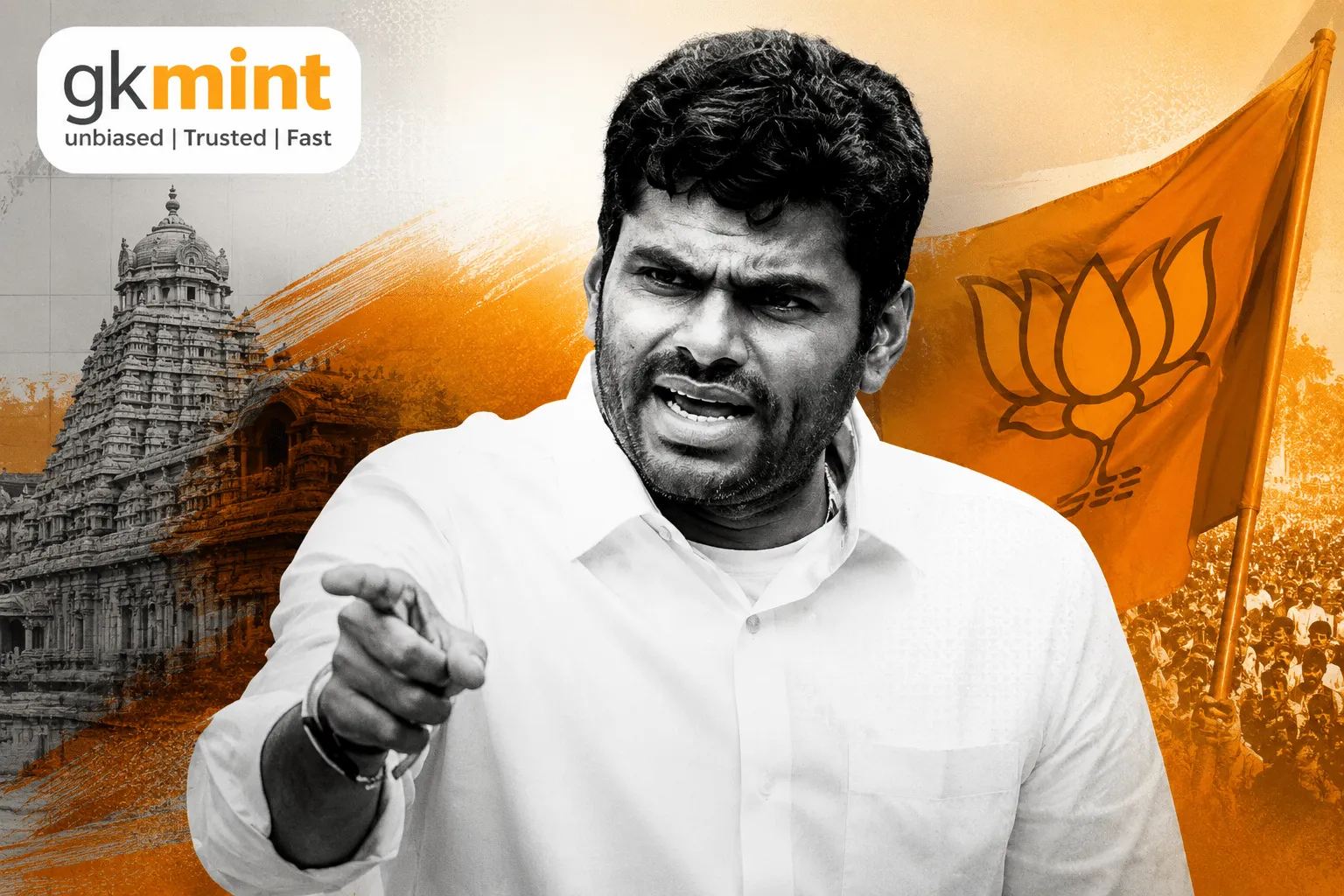
The biggest question surrounding K. Annamalai is no longer whether he can strengthen the BJP in Tamil Nadu, but whether the BJP remains the right vehicle for his political ambitions. Reports of his resignation from party responsibilities have triggered intense speculation about his next move. According to those familiar with the developments, the decision is not the result of a sudden disagreement but the culmination of months of reflection, shaped largely by the changing political landscape in Tamil Nadu following the Assembly election that brought Vijay to power. For a leader who has spent six years building his profile within the BJP, this moment could mark the beginning of a significant new chapter.
The BJP’s Most Promising Tamil Nadu Experiment
Since entering politics after leaving the Indian Police Service, Annamalai has emerged as one of the BJP’s most prominent faces in Tamil Nadu. Young, articulate, energetic, and media-savvy, he quickly became the centerpiece of the party’s efforts to expand its influence in a state where national parties have traditionally struggled. His background as a former civil servant gave him credibility, while his communication skills helped him connect with a wide range of voters. More importantly, he understood a fundamental truth about Tamil Nadu politics: successful parties often grow around strong personalities. In many ways, Annamalai became not just a party leader but also a political brand. Yet he was never a conventional BJP politician. Rather than relying solely on ideological themes, he frequently focused on governance, development, corruption, administrative reform, and Tamil aspirations, presenting a political style that stood apart from many of his counterparts elsewhere in India.
Expanding Political Space Beyond Traditional Boundaries
One of Annamalai’s defining characteristics has been his willingness to challenge established political narratives. His controversial description of former Chief Minister J. Jayalalithaa as a leader with strong Hindutva credentials illustrated this tendency. While the statement was intended to reinterpret a major Tamil political figure through a different lens, it sparked criticism from AIADMK leaders and Jayalalithaa’s close associates. The episode highlighted a broader feature of his politics: he often appears more interested in expanding political territory than defending rigid ideological boundaries. Supporters see this as evidence of strategic thinking and adaptability, while critics argue that it reflects an attempt to occupy multiple political spaces simultaneously. Regardless of interpretation, it has made him one of the more distinctive political figures in the state.
Vijay’s Emergence and the Changing Political Landscape
The arrival of Vijay as a major political force has significantly altered the environment in which Annamalai operates. For years, many BJP leaders believed Tamil Nadu was searching for a fresh alternative to the Dravidian establishment and expected Annamalai to become the face of that change. However, Vijay’s entry into politics transformed the equation. His popularity, cultural influence, and ability to attract younger voters allowed him to quickly capture much of the political space that Annamalai had hoped to occupy. As a result, the BJP’s strategy in Tamil Nadu faces new challenges. Several party leaders believe Annamalai was expected to shoulder multiple responsibilities simultaneously—building the organization, expanding the party’s reach, and becoming a mass leader—without being granted complete authority or sufficient time. Within political circles, there is a perception that Annamalai sought greater freedom to shape his own path, a request that may have contributed to the current situation.
What Lies Ahead for Annamalai?
The speculation surrounding Annamalai’s future has naturally led to discussions about whether he could launch a political movement of his own. His supporters are confident that he possesses several advantages, including statewide recognition, strong communication skills, a loyal support base, and an image that cuts across regional and caste boundaries. Some even argue that his personal popularity exceeds that of many established leaders from traditional political families. However, Tamil Nadu’s political history offers countless examples of charismatic figures who generated excitement but failed to build sustainable political organizations. Popularity alone is rarely enough. What makes Annamalai particularly interesting is that he does not fit neatly into any existing category. He is neither fully a Hindutva leader nor a traditional Dravidian politician, neither an outsider nor an insider. Instead, he occupies a unique position between regional aspirations and national politics, between organizational discipline and personal ambition. Whether he remains within the BJP or chooses an independent path, his next decision could have significant consequences not only for his own career but also for the future direction of Tamil Nadu politics.