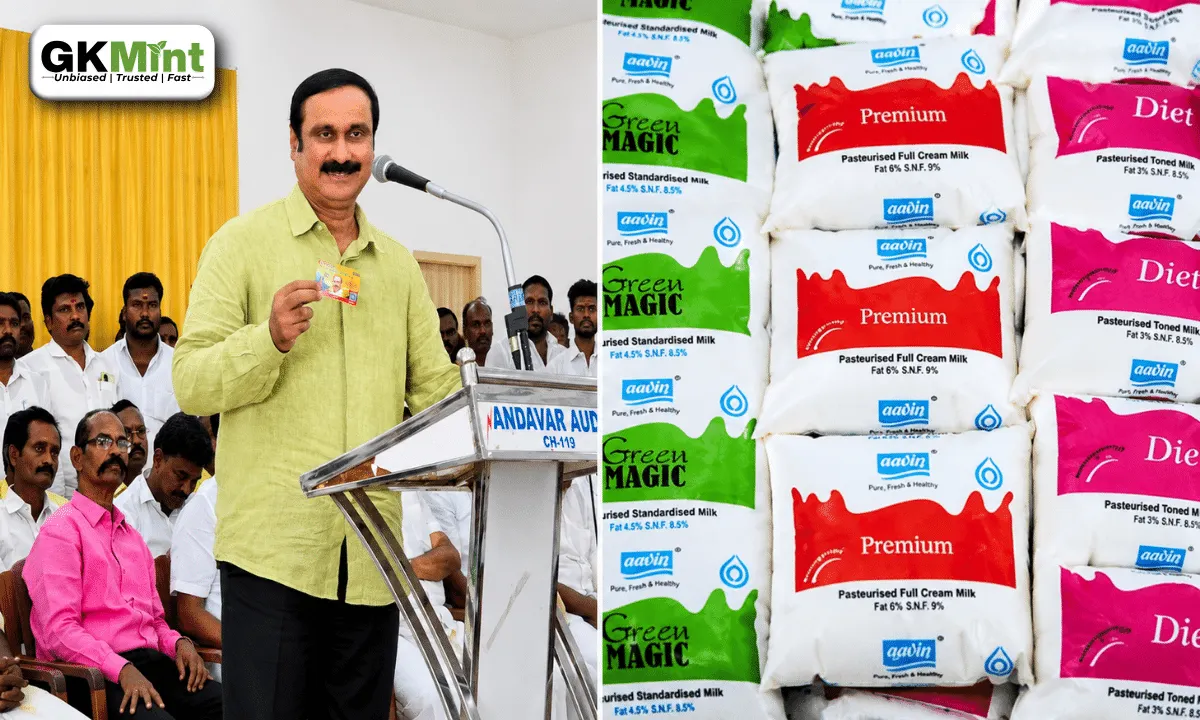
Milk is more than just a beverage in Tamil Nadu—it is a daily necessity that reaches millions of households every morning. That is why reports of a shortage in Aavin’s popular standardized milk variant, commonly known as “green milk,” have sparked widespread concern across the state. The issue gained further attention after PMK leader Dr. Anbumani Ramadoss urged the Tamil Nadu government to ensure an uninterrupted supply of Aavin milk for the public. According to reports, the supply of the green milk variant has witnessed a significant reduction in recent weeks, especially in Chennai, where demand remains consistently high. For many families, Aavin has long been the preferred choice because of its affordability, reliability, and accessibility. Any disruption in supply therefore goes beyond a simple market issue and directly affects the daily lives of ordinary people. As concerns grow, questions are being raised about whether the shortage is temporary, whether production challenges are to blame, and what steps the government plans to take to address the situation before it becomes a larger crisis.
The reported figures highlight why the issue has attracted so much public attention. In Chennai alone, Aavin is estimated to sell nearly 14 lakh liters of milk every day, making it one of the most important suppliers of milk in the region. Among its various products, the standardized green milk variant accounts for approximately 7.5 lakh liters of daily sales and remains one of the most sought-after options among consumers. However, recent reports indicate that the daily supply of this variant has fallen dramatically to around 3.5 lakh liters. This sharp decline has naturally created anxiety among consumers who depend on the product for their everyday needs. Adding to the concern are rumors suggesting that the green milk variant could eventually be phased out altogether. While no official confirmation has been made regarding such a move, the speculation has intensified public discussions and political criticism. Consumers who are unable to find Aavin green milk at local outlets are increasingly worried about whether they will continue to have access to an affordable source of milk in the future.
The impact of the shortage is being felt most strongly by poor and middle-class families, who often rely on Aavin because it provides quality milk at a comparatively affordable price. When Aavin milk becomes unavailable, consumers are left with little choice but to purchase milk from private brands, many of which are significantly more expensive. According to concerns raised by Dr. Ramadoss, households may have to spend as much as Rs 24 more per liter when switching to certain private alternatives. While that difference may appear small on a single purchase, the additional expense can quickly add up for families that consume milk every day. For households already dealing with rising living costs, higher food prices, and economic uncertainty, any increase in essential expenses can place added pressure on monthly budgets. Milk is not a luxury item that can easily be avoided; it is a staple used for tea, coffee, cooking, and nutrition, especially for children and senior citizens. This is why many consumers view the reduction in supply not merely as a business decision but as an issue that directly affects their quality of life and financial stability.
At the center of the debate is the financial challenge reportedly faced by Aavin. According to claims highlighted in the discussion, the production cost of one liter of the green milk variant is estimated to be around Rs 51, while the retail selling price remains at Rs 44. This results in a loss of approximately Rs 7 for every liter sold, creating a substantial financial burden for the state-owned dairy cooperative. Reports suggest that reducing the supply of the product may be one strategy being considered to manage these losses. However, critics argue that public welfare institutions are not meant to operate solely with profit as their primary objective. They believe that essential services and products should continue to be provided at affordable rates even when financial pressures exist, particularly when they benefit economically vulnerable sections of society. Dr. Anbumani Ramadoss has therefore called on the Tamil Nadu government to prioritize public welfare over profit considerations and ensure that Aavin’s most popular milk variant remains widely available. As the debate continues, the coming weeks will be crucial in determining how the government balances financial sustainability with its responsibility to provide affordable essentials to millions of people across Tamil Nadu.