More than 22.79 lakh candidates appear for the NEET UG 2026 Re-Test across 5,440 centres as authorities deploy AI surveillance, biometric authentication, and over two lakh security personnel to ensure transparency.
NEET UG 2026 Re-Test is being conducted across India on Sunday amid unprecedented security arrangements, marking one of the most closely monitored examinations in the country’s history. Organized by the National Testing Agency (NTA), the examination follows the cancellation of the original May 3 test after allegations of irregularities raised concerns about the integrity of the medical entrance process.
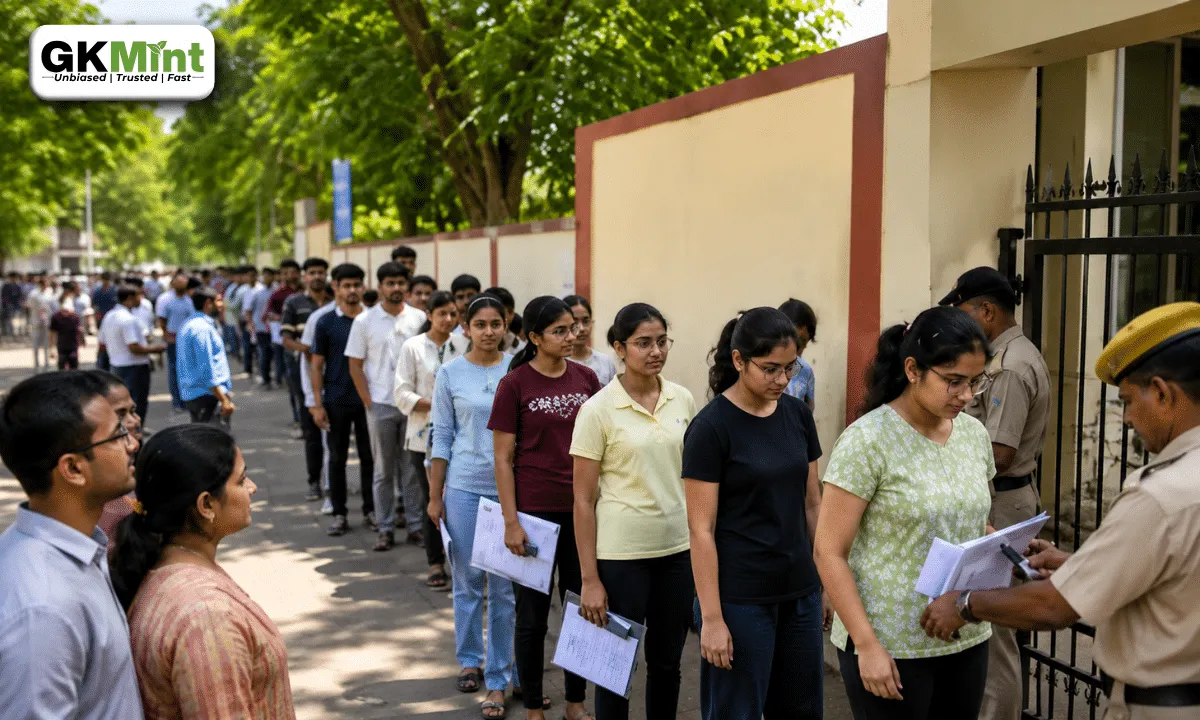
More than 22.79 lakh candidates are appearing for the NEET UG 2026 Re-Test at 5,440 examination centres spread across 551 cities in India and 14 international locations. The large-scale exercise involves advanced surveillance systems, biometric verification, extensive law enforcement deployment, and real-time monitoring mechanisms aimed at restoring public confidence in India’s most important medical entrance examination.
The outcome of the NEET UG 2026 Re-Test will determine admissions to undergraduate medical, dental, AYUSH, and other allied healthcare courses across the country, making it a critical event for millions of students and families.
Key Highlights
Major Numbers at a Glance
- 22.79 lakh+ candidates appearing
- 5,440 examination centres
- 551 Indian cities
- 14 overseas locations
- 2 lakh+ personnel deployed
- 1,38,560 AI-enabled CCTV cameras
- 51,311 signal jammers
- 48,448 biometric verification staff
- 38,795 frisking personnel
- Examination timing: 2:00 PM to 5:15 PM
- Extended timing for eligible PwD candidates: Until 6:20 PM
Key Security Features
- Aadhaar-based biometric authentication
- Face recognition verification
- AI-powered CCTV monitoring
- High-sensitivity metal detector screening
- GPS-enabled transportation of question papers
- Police escorts and enhanced logistics security
- Social media surveillance and misinformation tracking
Detailed Analysis
Why the NEET UG 2026 Re-Test Matters
The NEET UG 2026 Re-Test represents more than a routine entrance examination. It is a crucial test of institutional credibility following the controversy that led to the cancellation of the original examination.
NEET serves as the single gateway for admission to thousands of undergraduate medical seats across India. Any disruption in the examination process affects students, educational institutions, healthcare workforce planning, and public confidence in competitive examinations.

The NTA’s decision to conduct the NEET UG 2026 Re-Test under extraordinary security measures reflects growing emphasis on examination integrity and fairness.
AI Surveillance Takes Center Stage
One of the most notable aspects of the NEET UG 2026 Re-Test is the deployment of technology-driven monitoring systems.
Authorities have installed 1,38,560 CCTV cameras equipped with AI-based analytical capabilities. These systems are designed to identify suspicious patterns, unauthorized movements, and potential malpractice in real time.
Additionally, 51,311 jammers supplied by Electronics Corporation of India Limited (ECIL) and Bharat Electronics Limited (BEL) have been deployed to prevent unauthorized electronic communication.
Education policy observers note that the scale of surveillance deployed for the NEET UG 2026 Re-Test is among the largest ever seen in an Indian examination.
Multi-Layer Verification Process
To eliminate impersonation risks, every candidate appearing for the NEET UG 2026 Re-Test must undergo Aadhaar-linked biometric verification and facial authentication.
Nearly 48,448 trained personnel have been assigned to manage biometric checks.
Candidates are also subjected to high-sensitivity metal detector screening conducted by approximately 38,795 frisking staff members before entry into examination venues.
This multi-layer authentication process aims to ensure that only genuine candidates participate in the examination.
Expert and Official Reactions
Education administrators have emphasized that the extensive arrangements for the NEET UG 2026 Re-Test are intended to guarantee a transparent and fair testing environment.
Officials involved in the examination process stated that extensive mock drills conducted on June 20 helped identify operational challenges before the examination day.
Several education experts have welcomed the use of biometric verification and AI surveillance, arguing that technology can significantly reduce opportunities for malpractice.
However, some education analysts have also noted the importance of balancing strict security with candidate convenience. They argue that security protocols should not create unnecessary stress for students already facing intense academic pressure.
Student groups have generally expressed support for measures that protect merit and ensure equal opportunities for all candidates.
Background & Context
Why Was the Original Examination Cancelled?
The NEET UG 2026 Re-Test became necessary after allegations of irregularities emerged following the original May 3 examination.
The controversy sparked national debate regarding examination security, transparency, and fairness. Concerns raised by students, parents, educators, and policymakers ultimately led authorities to order a fresh examination.
The episode reignited broader discussions about the growing challenges of conducting large-scale competitive examinations in a highly digital and interconnected environment.
Evolution of Examination Security
Over the past decade, Indian competitive examinations have progressively adopted technological safeguards.
Earlier systems relied primarily on manual invigilation and document verification. The NEET UG 2026 Re-Test demonstrates a shift toward integrated security architecture combining:
- Artificial intelligence
- Biometric authentication
- Real-time surveillance
- Cyber monitoring
- GPS-based logistics tracking
Experts believe these developments could shape the future of examination management across India.
Impact & Implications
Impact on Students
For candidates, the NEET UG 2026 Re-Test represents both an opportunity and a challenge.
While the re-examination offers a fresh chance under stricter safeguards, it has also prolonged uncertainty for millions of aspirants who have spent months preparing for medical admissions.
Students have been advised to arrive between 11:00 AM and 1:30 PM, carry required identification documents, and strictly follow examination guidelines.
Impact on Public Policy
The extensive arrangements for the NEET UG 2026 Re-Test may influence future policy decisions regarding competitive examinations.
Policymakers are likely to examine whether AI surveillance, biometric verification, and centralized monitoring should become standard features in major national examinations.
The examination may also serve as a benchmark for future reforms in recruitment and educational testing systems.
Economic and Administrative Implications
Conducting the NEET UG 2026 Re-Test has required significant financial and administrative resources.
The deployment of more than two lakh personnel, advanced technology infrastructure, transportation security, and emergency facilities represents a major logistical undertaking.
However, experts argue that safeguarding examination integrity ultimately protects the value of educational credentials and strengthens public trust in merit-based admissions.
Support Measures for Candidates
Authorities have implemented several welfare measures to support candidates during the examination.
Facilities include:
- Drinking water stations
- ORS availability
- Ambulance services
- Shaded waiting areas
- Parent seating arrangements
- Additional rough sheets
- Wall clocks in examination halls
In Delhi, authorities have also established cooling zones and enhanced public transportation support to facilitate candidate travel.
The NEET UG 2026 Re-Test stands as one of the most ambitious and heavily secured examinations ever conducted in India. With over 22.79 lakh candidates participating under the watch of AI-powered surveillance systems, biometric authentication mechanisms, and an extensive security network, authorities are seeking to restore confidence in the country’s premier medical entrance examination.
The success of the NEET UG 2026 Re-Test could shape the future of examination governance in India, setting new standards for transparency, accountability, and technological integration. As results and post-examination reviews emerge in the coming weeks, policymakers and education stakeholders will closely evaluate whether these unprecedented measures provide a sustainable blueprint for safeguarding competitive examinations in the years ahead.