
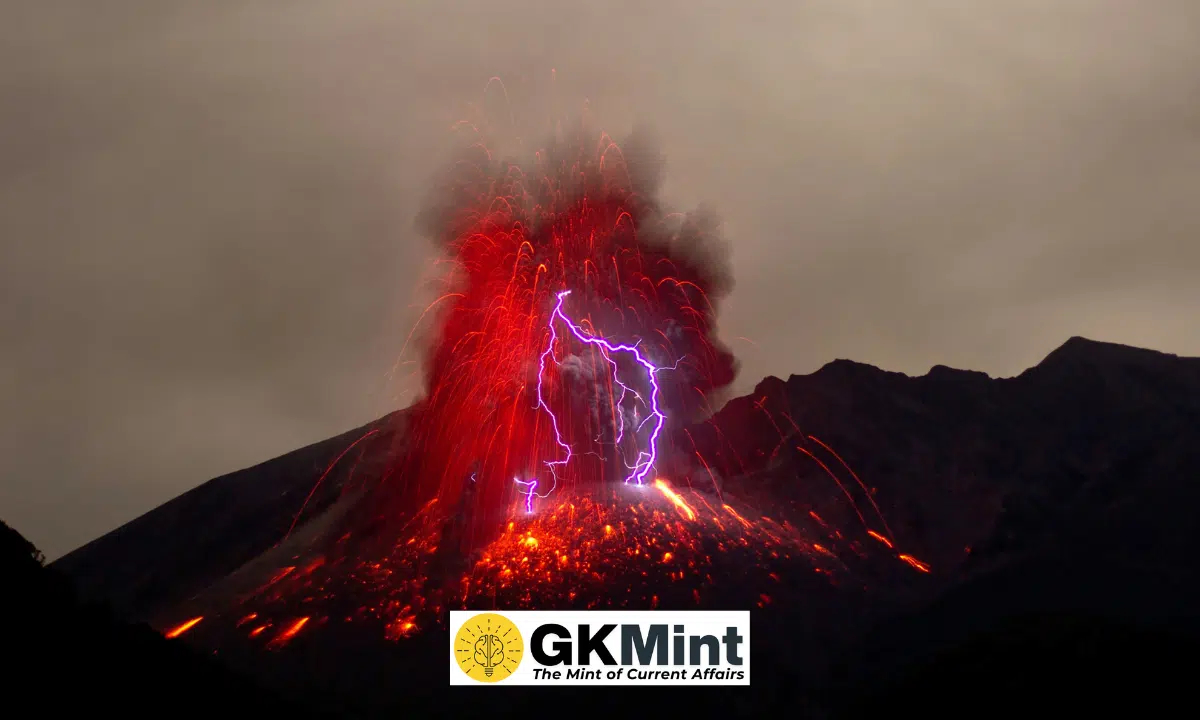
Volcanic lightning is lightning that occurs during volcanic eruptions, not during thunderstorms. It occurs mainly in the early stages of an eruption when volcanic ash, rock particles, and water vapour are violently expelled into the atmosphere.
How Volcanic Lightning Forms
When Ash Particles collide and rub together, generic static electricity is produced. This leads to Charge separation, which produces electrostatic discharge, and then lightning is produced.
When a volcano erupts, it often spews hot gases and ash from the vent. This shoots upwards, creating a thick, towering ash plume.
Heat and Updraft
The heat from the volcanic eruption will act like a monstrous engine. This produces ash and gas, which are injected into the atmosphere.
Ash Particles Rubbing
During an eruption, ashes are produced. These ashes rub against each other, creating friction. Scientists define this as the triboelectric effect. This generates static electricity.
Charge Separation
When the collisions happen, seal electrons become negatively charged. Some others lose electrons, thereby becoming positively charged. Thus, separate areas of positive and negative charge build up within the plume.
Lightning Discharge
Thus, the difference in charge between these regions built up electrical energy, producing a brilliant flash of lightning. This follows the same physics that happens during a regular thunderstorm.
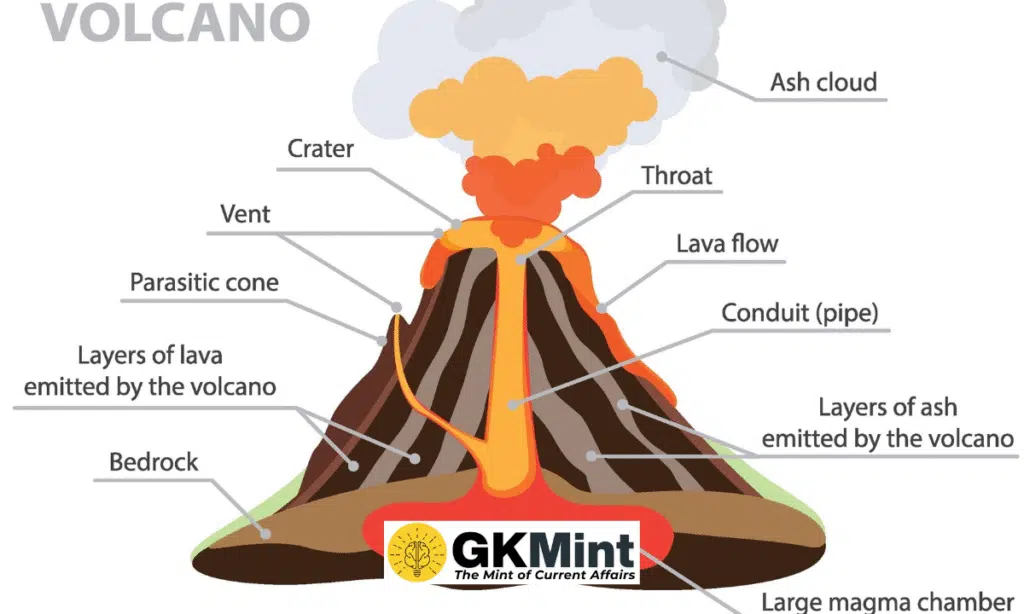
Lightning can occur:
- Near the ground in dense ash clouds.
- Higher in the plumes, where water vapour condenses into ice particles that also collide and charge. Volcanic plumes often contain more water vapour than thunderstorm clouds.
Volcanic plumes often contain more water vapour than thunderstorm clouds.
• EPFO Withdrawals and the Retirement Crisis
• Kerala Declared Extreme Poverty Free – 2025 Initiative
Monitoring – Volcanic Lightning
- Global Lightning Detection Networks detect volcanic lightning.
- eg, World Wide Lightning Location Network (WWLLN).
- Used as an early warning.
- Helps evacuate the local Population
- Alerts aviation authorities, since volcanic ash can damage aircraft engines.
Historical Reference
- First written account: Pliny the Younger, describing the 79 AD eruption of Mount Vesuvius.
- First Scientific Studies: Luigi Palmieri (19th Century) at Mount Vesuvius.
Definitions
Lightning
- Caused by electrostatic discharge due to charge separation in clouds.
- Sudden neutralisation releases heat, light, and sound (thunder).
Volcano
- A Volcano is an opening on Earth’s Crust that allows magma, gas, and ash to escape.
- Volcanic Ash is composed of fine rock and mineral particles, not combustion ash.
• What is Volcanic Lightning? – The Hindu
• Volcanic Lightning Study – ScienceDirect